Wednesday, July 11, 2018

Lavender Love: Homemade Lavender Lemonade

Lavender Lemonade
It's lavender season! Here at Cupola Corner the dehydrator has been running almost nonstop this past week. The dried lavender is being stripped from the stalks in preparation for making potpourri. It's time for a break and an ice cold glass of refreshing homemade lavender lemonade. This recipe is based on my Homemade Lemonade recipe.


Homemade Lavender Lemonade


(Double Recipe in Italics)

Ingredients:

3 lemons, or 1/2 cup lemon juice (6 lemons/1 cup lemon juice)
1/2 cup white sugar (1 cup)
1 teaspoon of dried culinary grade lavender flowers (2 teaspoons)*
3 cups water (6 cups)
 Lemon slices and fresh sprigs of lavender for garnish 

Directions:

  1. In a sauce pan mix the sugar into 1 cup (2 cups) of the water. Heat until boiling and sugar has dissolved. 
  2. Pour the sugar and water syrup over the lavender and let steep for 10 minutes.
  3. Pour the lavender syrup through a fine sieve or cheesecloth to remove the lavender. Don't worry if there's a few flowers left in the syrup. It makes a nice garnish.
  4. Chill the lavender syrup. 
  5. Juice the lemons to make 1/2 cup (1 cup) of juice. Roll the lemons on a hard surface before you cut into them and they will juice more easily. Skip this step if you are using lemon juice from a bottle. 
  6. In a pitcher, combine the chilled lavender syrup, the lemon juice and the remaining 2 cups (4 cups) of water. Chill and serve over ice. Garnish with a slice of lemon and a sprig of fresh lavender. Enjoy! 


Makes 3 1/2 cups (7 cups)

*During lavender season you can substitute fresh lavender flowers for dried.  Gently rinse the lavender before use. Use 1 tablespoon (2 tablespoons) of fresh lavender to make your Lavender Lemonade

🔍To return to the main page, please click on the banner at the top of this page or click on this link: Cupola Corner Blog

Saturday, July 07, 2018

Tartans

Maple Leaf Tartan Kilt
I’ve always been intrigued by woven fabrcs and I am absolutely fascinated by tartans. My mother made kilts for my sister and I when we were young. I still have my Maple Leaf tartan kilt that she made during Canada’s centennial year. Tartans were originally woven from wool, but today they are made from a variety of fibres.

We usually think of Scotland when we think of the history of the tartan, and indeed regional tartans go back many hundreds of years in Scottish history. The oldest evidence of tartan in Scotland dates back to the 3rd century A.D. There is also archeological evidence of tartans being made and worn thousands of years ago in Central Europe, China and Scandinavia.

Tartans are made by weaving, at right angles, different colours of thread or yarn in predetermined patterns or setts. The ways in which the horizontal rows (weft) and vertical columns (warp) intersect produce a pattern that is unique to each sett. Where threads of the same colour pass each other, the colour will be its darkest.

In Scotland, tartans have been associated with clans since the beginning of the 19th century. Many clans have several tartans. In order for a tartan to be “official”, it must be recognized as such by the clan chief. It can then be registered with the Lord Lyon King of Arms and once approved, it is recorded in the Lyon Court Books.

Tartans are also associated with families, countries, businesses and individuals. Anyone can design a tartan. There is even an OUTLANDER: The Series tartan (see below). It is estimated that there are literally thousands of tartans around the world and new ones are being created every year. If you wanted, you could create a tartan!

https://www.dunmorescotland.com/shop/prestige-collection/arisaig-black-leather-black-watch-tartan-weekend-bag-black-bridle-trim/
Black Watch Weekender Bag
by Dunmore of Scotland
Royal Stewart and Black Watch are two of the most popular tartans worldwide. Royal Stewart is Queen Elizabeth II’s personal tartan. Black Watch was and continues to be used by the British army and Commonwealth armed forces. Black Watch is one of my personal favourites.

So is there a difference between tartan and plaid? The answer is yes! The sett of almost all tartans is identical on both axes. Tartans are geometrically symmetric and the fabric will look the same each time you rotate it 90°. Plaids have different patterns on the weft and warp. Confusion between the terms tartan and plaid may have arisen because of the Gaelic word plaide which means ‘blanket’. A plaide was a rectangular piece of tartan that was worn over the shoulder and held in place with a belt around the waist.

Tartans make reoccurring appearances in both fashion and home decor. If you have Scottish ancestry, you may have already researched your clan tartan, but Outlanders can enjoy tartans, too. A cushion made from tartan is a great accent piece. A tartan cape or shawl makes a lovely fashion statement. If you can make it with fabric, you can make it with tartan. So, why not add a wee bit o’ Scotland to your life? You never know what might happen...


🔍To return to the main page, please click on the banner at the top of this page or click on this link: Cupola Corner Blog


Outlander Tartan Scarves
Outlander: The Series Tartan Scarves
at The Celtic Croft


Reference: "Tartan." Wikipedia, en.m.wikipedia.org/wiki/Tartan. Accessed 25 June 2018. 

Thursday, June 28, 2018

Strawberry Lemonade: Fresh or Frozen

Nothing says summer like a glass of homemade lemonade. Add some strawberries and you’ve got a tasty variation that will tickle your tastebuds.

Make up a batch of my Homemade Lemonade (do not double the recipe). You will need about a cup to a cup & a half of strawberries (fresh or frozen). Pour the chilled lemonade into a blender. Add the strawberries and pulse until the berries are blended. Pour into glasses, garnish with a fresh strawberry and serve.

You can mix up a single serving by using about 1/4 to 1/3 cup of strawberries per half cup of lemonade.

Double up on the frozen berries to create a slushy version.

This delicious treat is sure to impress. The slushy version is a welcome refreshment on a hot summer day. Enjoy!


🔍To return to the main page, please click on the banner at the top of this page or click on this link: Cupola Corner Blog

Strawberry Lemonade (slushy version)
Strawberry Lemonade
(slushy version)


Sunday, June 24, 2018

Podcast: Spa Day For The Alpacas (Black Ash Acres)

Listen at SoundCloud OR on iTunes.


🔍To return to the main page, please click on the banner at the top of this page or click on this link: Cupola Corner Blog

Friday, June 22, 2018

Sunshine On My Shoulders

It’s officially summer, and while it’s not clear how the weather’s going to unfold over the next few months, it is clear that there will be sunshine on my shoulders. I love sunshine. I love the light and the warmth that it provides. I love that a sunny day can make you feel uplifted and inspired. I love all of these things, but I do not love skin cancer. Ultraviolet rays in sunlight are the major cause of all forms of skin cancer. If we’d known this fifty years ago, would we have done things differently? I hope so.

Over the past fifteen years I have accumulated a lot of second-hand experience with all forms of skin cancer. When my husband was first diagnosed, he had malignant melanoma and squamous cell and basal cell forms of skin cancer. Over the course of fifteen years he’s had dozens of biopsies, several surgeries, photodynamic therapy and radiation. He’s been sprayed and scraped. His body is covered with scars from dozens and dozens of cuts and literally hundreds of stitches. And it’s not over yet.

Skin cancers are usually a result of damage that was done years ago. Back when they sold lotions and creams to help you get a tan. It’s almost litigious. Today you can buy lotions, a.k.a. sunscreen, to help prevent damage to your skin. You should be using these products on a daily basis. If you don’t, you are putting yourself at risk. You may not like sunscreen, but I can guarantee that you will like Aldara or Efudex creams even less. These treatments for precancerous lesions are voracious and it’s not pretty.

Anyone can get skin cancer. Everyone is at risk. It doesn’t matter if you tan easily or if you have dark hair or dark skin. You can still get skin cancer. It is true that some people are more prone to develop skin cancer, but it is also true that taking steps to prevent skin cancer is now the responsibility of each and every one of us. Changes to the earth’s ozone layer have made prevention even more imperative and if you aren’t actively trying to protect yourself, you are passively allowing yourself to needlessly become a victim.

Skin cancer is one of the easiest forms of cancer to treat, but early detection is critical. Don’t rely on photo posters in your local pharmacy to self diagnose. Those pictures depict situations that are almost beyond treatment other than perhaps by surgical removal. Sadly, your family doctor may not even recognize skin cancer in its early stages. If you have a spot that you’re concerned about, insist on a referral to a dermatologist, especially if you have a personal or family history of skin cancer. Skin cancer is treatable, but it can also be a killer if not caught early.

Make sunscreen a part of your daily routine. If you don’t like how it makes your skin feel, you’re using the wrong sunscreen. Find something that absorbs and dries quickly and use it every day, all year long. In the summer, wear a hat with a brim when you’re outside. Hair has a very low SPF factor and the number of malignant melanomas found on the scalp is on the increase. Remember, UV rays can penetrate clouds. Use sunscreen even if the sun is not shining.

Although skin cancer usually shows up in adults, infants and young children are most vulnerable to sun damage because their skin is thinner and they have less melanin, which can help protect the skin. Tweens and teens are at risk of sun damage to their skin because they are less likely to use sunscreen and also because of tanning bed use. Melanoma is rare in children, but skin damage from sun exposure accumulates and our children could very well be facing a fight that could have been avoided. Promote sunscreen use through the use of sunscreen.

“Sunshine on my shoulders makes me happy” and I want that to always be the case. I’ll be using sunscreen on those shoulders before I head outside this summer. I hope that you’ll do the same.

🔍To return to the main page, please click on the banner at the top of this page or click on this link: Cupola Corner Blog

Friday, June 15, 2018

Podcast: Strawberry Fields

Listen at SoundCloud OR on iTunes.


🔍To return to the main page, please click on the banner at the top of this page or click on this link: Cupola Corner Blog

Thursday, June 14, 2018

Flavored Vinegars: Ruby Red Raspberry Vinegar

Ruby Red Raspberry Vinegar (Ready to Use)
Flavored vinegars add zip and zing to salads and sauces. They also make great gifts! You can make a flavored vinegar fairly easily and safely just by following a few basic steps.

Use glass jars or bottles that have no cracks or nicks. You must be able to seal the jar or bottle. A large canning jar works well. Wash your container/s with soap and water and then sterilize them by letting them simmer, fully immersed in a pot of hot water, for 20 minutes. Metal lid rings can be sterilized with the jar. Add the snap cap (with red sealing ring) into the boiling water for the last five minutes. Remove the pot from the heat source and let the bottle and lids sit in the warm water until you are ready to use them.


Ruby Red Raspberry Vinegar

1/2 to 3/4 cup raspberries
1 cup white vinegar

  1. Wash and drain the raspberries. Squish them just a bit and then place them in the bottom of a sterilized jar that will hold at least two cups. 
  2. Heat the vinegar to just below boiling and then pour over the raspberries. Seal the jar.
  3. Let the vinegar and raspberries sit for two to three weeks in a cool, dark place.
  4. Strain the mixture several times through cheesecloth to remove the berries. Squish the berries to remove all of the liquid. Keep straining until your vinegar is nice and clear.
  5. Pour the vinegar into a clean sterilized jar. Seal and store in the refrigerator.
For a tasty salad dressing, whisk together 3 tablespoons of Ruby Red Raspberry Vinegar and one tablespoon of honey. Slowly add 2 tablespoons of extra virgin olive oil. Season with salt and pepper. (Recipe courtesy of Eating Well.)

🔍To return to the main page, please click on the banner at the top of this page or click on this link: Cupola Corner Blog

Ruby Red Raspberry Vinegar (Just Made)


Sunday, June 03, 2018

Hot, Hot, Hot!

Banff Upper Hot Springs with Cascade Mountain in BackgroundA hot spring is a natural spring that is geothermally heated. In other words, the water comes up out of the ground already heated and ready for you to enjoy a relaxing soak. Not all hot springs are suitable for bathing, though. Some, such a those in volcanic areas, are simply too hot. Spring water that has been heated by percolating among hot rocks that are deep beneath the earth’s surface are often the perfect spot for taking the waters. You will find such locations around the world, and I would love to try them all! 

The Banff Upper Hot Springs is one of Canada’s naturally occurring hot springs. It is nestled in the Canadian Rockies and is one of three hot springs operated by Parks Canada. The water is typically between 37* C and 40* C. Hot springs each have their own unique blend of minerals and the Banff Upper Hot Springs is no exception. It is this mineral-rich hot water that has historically been the therapeutic basis for taking the waters and tourists have been coming to this particular location for well over a hundred years. First Nations people have long considered the area sacred.

People have been enjoying the healing benefits of hot springs for thousands of years. In Europe and Japan they are accepted treatments for a variety of ailments. A soak in a hot spring can improve blood circulation, reduce stress, relieve pain and improve the condition of your skin. In Banff, you get all this and a magnificent view of the Rocky Mountains.

If you get the chance to visit Banff, plan to visit the hot springs and be prepared to be amazed. A soak in the Banff Upper Hot Springs is a treat for the senses and an experience not to be forgotten. I can personally vouch for the fact that it’s also a really great way to relieve the aches and pains associated with the activities that you have been enjoying while on vacation. Come on in...the water’s great and we’re feelin’ hot, hot, hot!

🔍To return to the main page, please click on the banner at the top of this page or click on this link: Cupola Corner Blog

Saturday, May 26, 2018

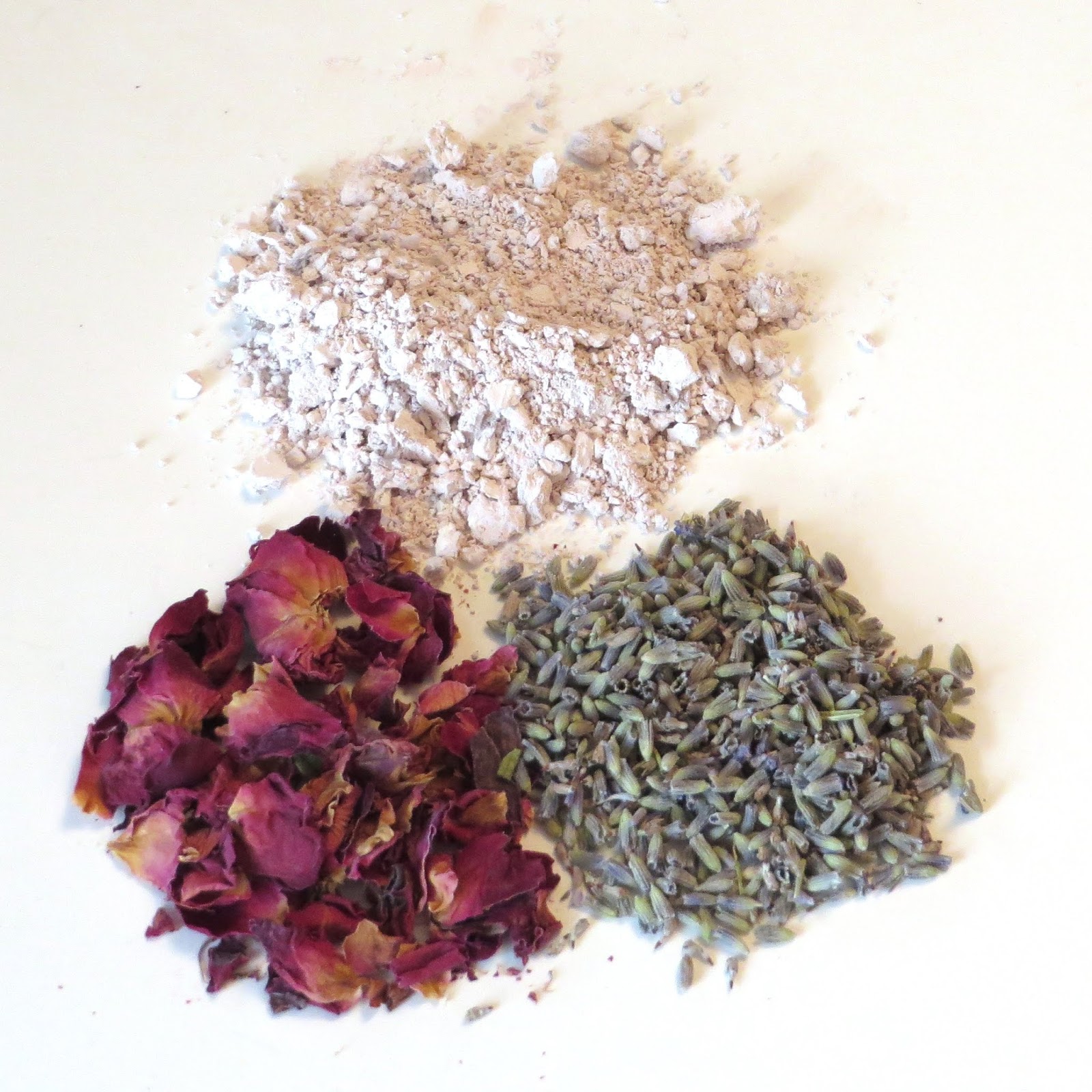
More Mud: Rose Petals & Lavender Clay Mask

My daughter, Sarah, with French Rose Clay, Rose Petals & Lavender Buds Facial Mask
Time to pamper yourself! Give this French pink clay mask recipe a try and enjoy an amazing and rejuvenating clay mask experience.

This mask is one of my original recipes. It uses French pink clay which just seemed to beg for roses, which in turn demanded a hint of lavender. It smells divine. This is a smooth mask that applies easily, feels great and dries quickly. It is gentle enough to use on a regular basis. This recipe uses dry ingredients so it can be stored indefinitely.

French rose/pink clay is good for normal, dry, sensitive and mature/aging skin. French rose clay is a blend of red illite and white kaolin clays. It is very mild. French pink clay is light, smooth and luxurious. It’s probably my favourite. 

Clay masks are best mixed in a ceramic or glass bowl with a wooden spoon. When making your own masks, always remember to do a skin patch test to determine sensitivity to the mask. Before using a clay mask, cleanse your skin to remove make-up and surface dirt. When rinsing off the mask, remember to thoroughly rinse out the sink and flush out the drain with running water. If you use a facecloth to clean off the mask, use an old one, especially with French pink clay. 

Rose Petals & Lavender Clay Mask Recipe

2 tablespoons dried rose petals, ground
2 tablespoons dried lavender buds, ground
3/4 cup French Rose clay
water or lavender water or rose water

  1. Grind dried lavender buds and dried rose petals using a grinder or mortar and pestle. Use only rose petals, not the calyx.
  2. Using a wooden spoon, thoroughly mix ground lavender buds and rose petals with the French pink clay.
  3. Store clay mixture in a glass jar.
  4. Mix 2 tablespoons of dry clay mask mixture with 1 to teaspoons of water (or lavender water or rose water). Use a small wooden spoon or stick to blend. Add additional drops of liquid until you have the desired consistency.
  5. Apply to face and allow to dry for 5 to 10 minutes. Wash off with warm water using an old face cloth. Follow up with a moisturizer.
Enjoy!

Botanic Planet is a good source (Canadian) for clay and botanicals.

🔍To return to the main page, please click on the banner at the top of this page or click on this link: Cupola Corner Blog

Rose Petals & Lavender Clay Mask Recipe French Rose Clay, Rose Petals & Lavender Buds

French Rose Clay, Rose Petals & Lavender Buds


Tuesday, May 22, 2018

Floral Water: Lovely Lavender

Lovely Lavender Floral Water
I’ve always liked floral waters and have been intrigued by the idea of creating scented water from flowers. I recently gave it a try and it was astonishingly easy to do. I call my creation Lovely Lavender and, needless to say, I love it.

Lavender water has lots of uses. It’s great as a facial toner. It can be added to your clay face mask recipes. Put some of your lavender water into an atomizer and use it as a linen or room spray. Or give yourself a spritz to relieve sunburn pain, or just because it smells great and it will make you smell great, too.

Lovely Lavender floral water is made with witch hazel. You can find witch hazel in most pharmacies or health food stores. Witch hazel has many of its own amazing properties and uses. It is a natural antioxidant and anti inflammatory, and is used extensively in skin care products. Witch hazel also acts as a stabilizer and gives your floral water a longer shelf life.

I always think that it's a curious thing that when you steep lavender, the water is not purple like the flowers. The same thing happens when you make lavender jelly. It still smells wonderful, though, even if it's not lavender in color,

Lovely Lavender Floral Water
1 cup water
1/4 cup dried lavender flowers
2 tablespoons witch hazel
  1. Boil water and pour over the lavender flowers. Allow to steep 20 to 30 minutes. 
  2. Strain lavender water several times through cheesecloth to remove the lavender flowers.
  3. Put witch hazel into storage container and then pour in the warm lavender water. Cool, cap and store in refrigerator for up to six months. 
  4. Shake well before each use. 

Botanic Planet is a good source (Canadian) for botanicals.
If you’re just looking for lavender, check out Weir’s Lane Lavender and Apiary.

You can learn more about lavender by reading this post: Lavender Love 

🔍To return to the main page, please click on the banner at the top of this page or click on this link: Cupola Corner Blog

Lavender from Garden